Where AI automation genuinely saves time—and where it creates risk
 Ansh PuniaIndependent AI & systems builder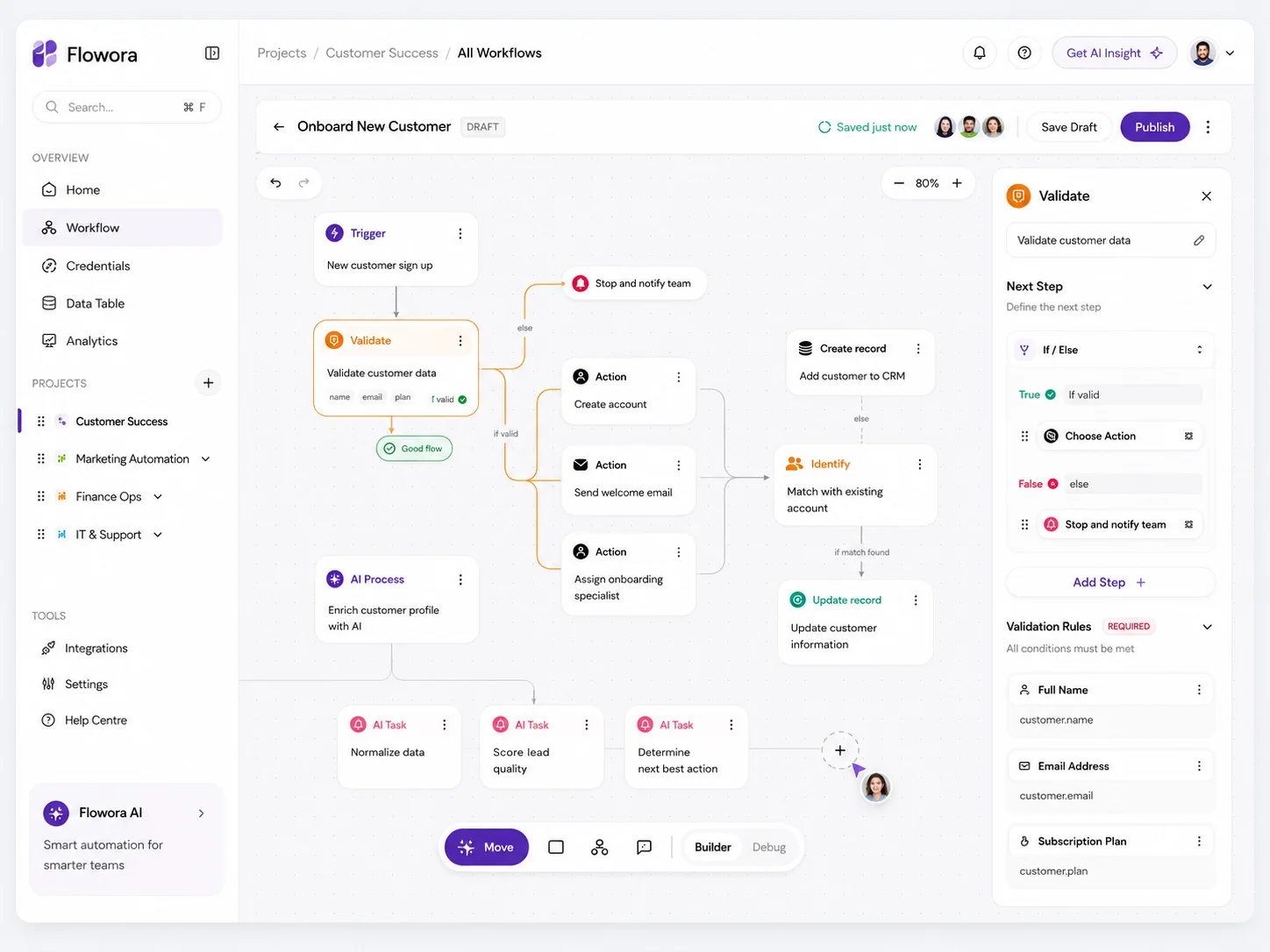
A practical framework for deciding what should be automated, what needs review and what should stay human.
01Start with repeated work, not the word AI
The best early candidate is a frequent task with recognisable inputs, a consistent next action and a cost people already feel. Mapping that work usually reveals that only part of the process needs AI; the rest can stay deterministic and easier to test.
02Design the review path before the happy path
Low confidence, missing information, unusual values and consequential actions need a named owner. A useful system shows why an item was held, what evidence is available and exactly what a person is approving.
03Measure the work removed and the risk introduced
Time saved is only useful when rework, failure recovery and ongoing maintenance are included. Track volume, completion time, exception rate and manual intervention so the business can see whether the automation is genuinely improving the operation.
Before moving forward, make these visible.
- A repeated, high-friction task
- Known exceptions and review owner
- Visible logs and failure handling
- A baseline for time and quality
AI automation
This thinking is part of how I approach AI automation work—scoped around the business outcome, built in stages you can review, and handed over with the accounts and documentation in your name.
See how AI automation projects run